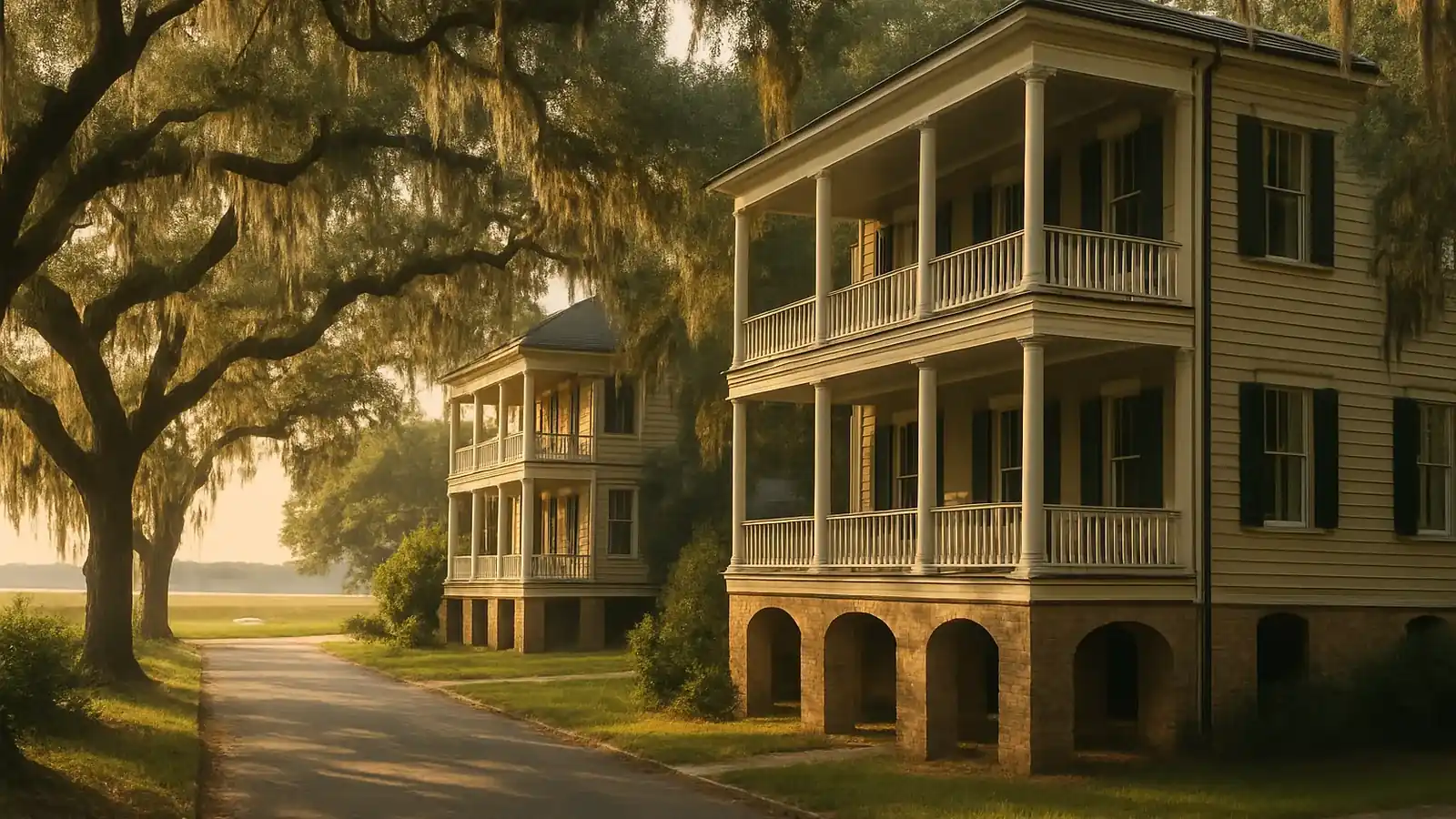
Crawl space mold removal in Charleston runs $2,000–$6,000 for remediation alone and $4,000–$12,000 with full encapsulation and a dehumidifier. Vented crawl spaces pull humid Lowcountry air onto framing cooled by the air conditioning above, where it condenses, which is why sealing outperforms venting here.
Here's the mechanism, and what a repair that actually holds looks like.
Why venting fails in this climate
Crawl space vents exist because of a reasonable idea: exchange the damp air under a house for drier outside air and the space dries out. That works in a dry climate. It fails in the Lowcountry.
From late spring into fall, outdoor dew points here stay high day and night. The air entering those vents holds a great deal of moisture. Under the house it meets floor joists, subflooring, and supply ductwork that your air conditioning has been cooling from above all day: surfaces sitting below the dew point of the air touching them. Water condenses out onto the wood. Not damp air: liquid water on framing, repeatedly, through the warmest half of the year.
That's why crawl space mold here isn't a sign of a leak or of neglect. It's the predictable output of an assembly working exactly as designed, in a climate the design didn't anticipate.
What the work involves
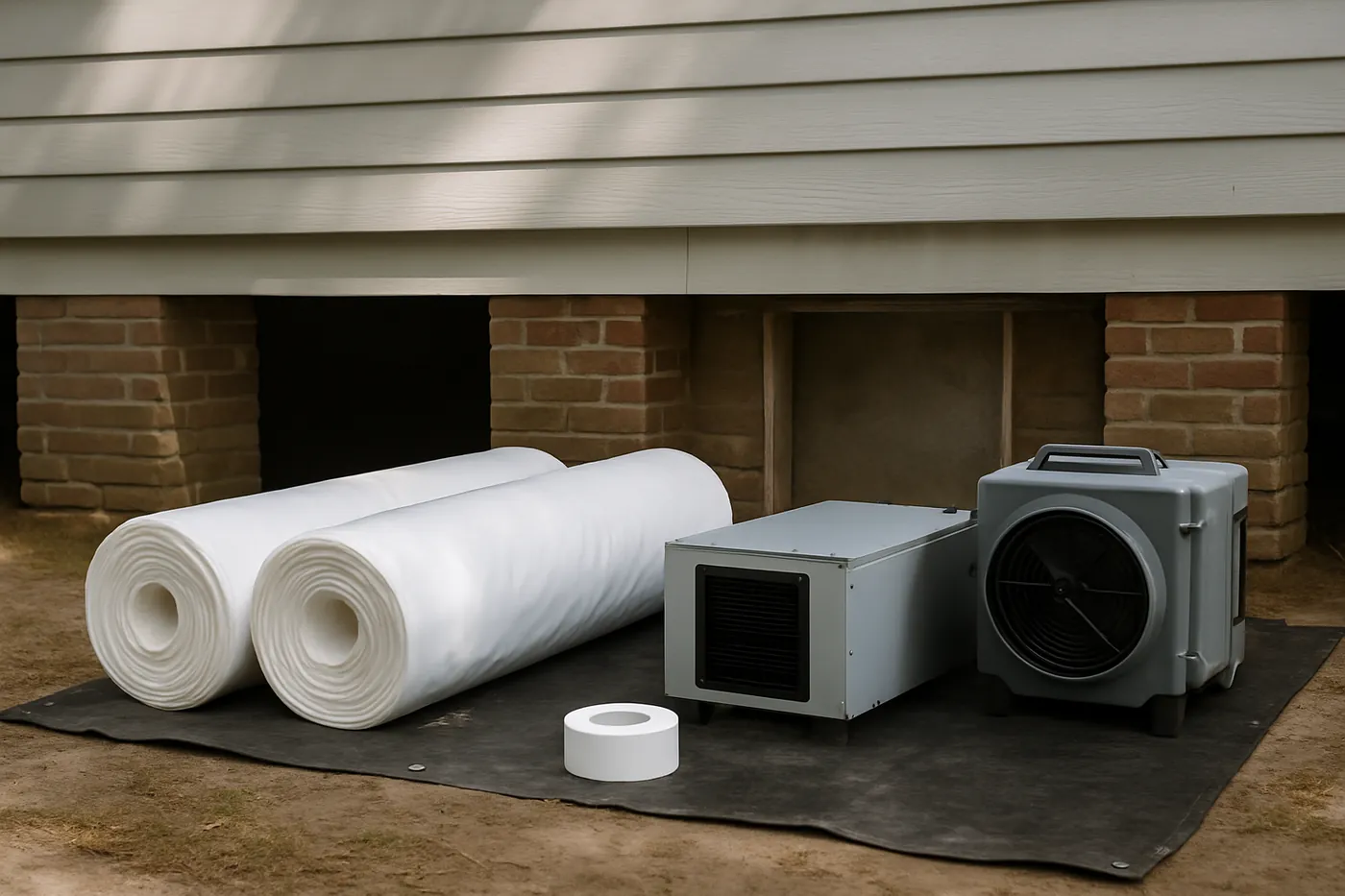
- Address bulk water first. Standing water or a spring means drainage (a sump, a French drain, or grading correction) before anything else. A liner over standing water is a pond with a cover.
- Remediate. HEPA vacuuming and cleaning of joists and subfloor; removal of contaminated fiberglass insulation, which holds moisture and does nothing useful once wet.
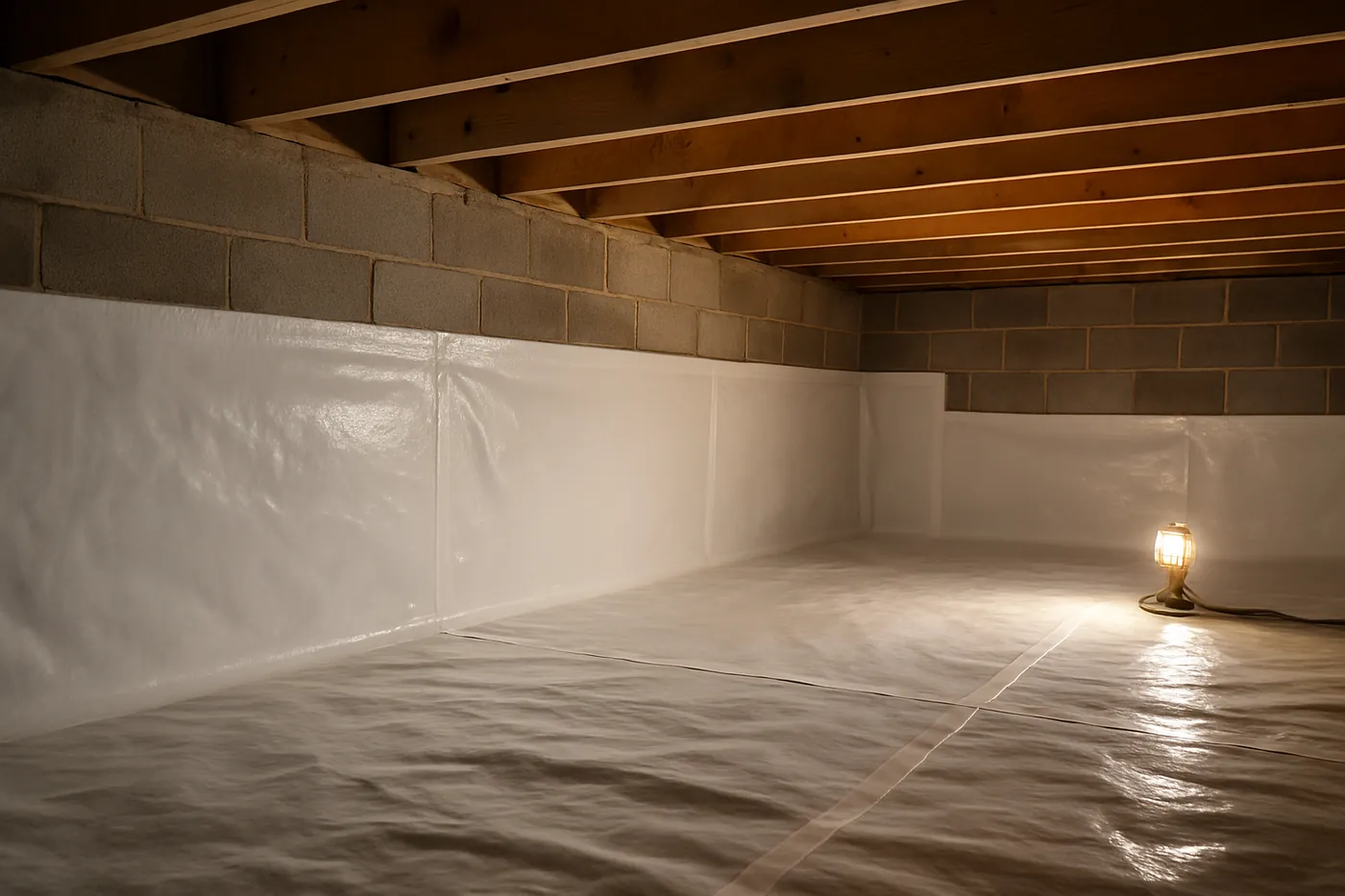
- Vapor barrier. Heavy reinforced liner across the soil and up the foundation walls, seams sealed and mechanically fastened.
- Seal the openings. Vents closed, rim joists air-sealed, access door gasketed. The crawl stops exchanging air with outside.
- Dehumidify. A dedicated crawl space unit with a drain, sized to the volume, holding relative humidity in the 50s.
- Verify. Moisture content readings on joists at completion, and a target for what the space should hold going forward.
What we won't recommend
- More vents. They supply the moisture; adding them adds the problem.
- A crawl space fan pulling outside air in. Same mechanism, powered.
- New fiberglass batts against the subfloor in a crawl that hasn't been sealed. It absorbs moisture, sags, and hides what's happening above it.
- Fogging or spraying instead of removal. EPA guidance is physical removal; a treated joist with the growth still on it isn't remediated.
- Encapsulation on a crawl with unresolved standing water. Drainage comes first, and if a bid skips that step, ask why.
What it fixes upstairs
A sealed, dehumidified crawl usually resolves several things homeowners had stopped connecting to each other: the musty smell strongest near the floor, indoor humidity the air conditioning couldn't bring down, hardwood cupping, and cool damp floors in August. Roughly half the air in a typical house has passed through the crawl space at some point, so what's happening down there is happening to your indoor air. Fix the crawl and the house changes.
Should a Lowcountry crawl space be vented or closed?
This is the market's defining argument, and the signs that it has been settled the wrong way are familiar: floors that feel cool and damp in August, an earthy smell strongest at the floor vents, insulation hanging down in sheets, allergies worse indoors than out.
| Approach | What happens under the house | Lowcountry verdict |
|---|---|---|
| Vented, as built | Humid outdoor air enters and condenses on cooler surfaces | The single most common mold mechanism in this market |
| Vented plus a fan | More of the same air moved faster | Usually makes condensation worse in a humid summer, not better |
| Sealed with a liner | Ground moisture is cut off; the air is still humid | Necessary, and on its own not sufficient here |
| Closed and conditioned | Vents closed, liner sealed, humidity actively controlled | The approach that matches the climate; needs a dehumidifier that is maintained |
Long humid summers and high dew points from late spring through early fall are the whole problem. A crawl space open to that air is being asked to do something the climate will not allow.
Crawl space questions, straight answers
What does crawl space mold removal cost in Charleston?
Remediation alone typically runs $2,000 to $6,000 depending on square footage and how much material must come out. Remediation with full encapsulation and a dedicated dehumidifier generally lands $4,000 to $12,000. Drainage work, where standing water is present, is priced separately because it has to happen first.
Do I have to encapsulate, or can I just clean it?
You can clean it, and if nothing changes underneath it will come back, usually within a season or two. Cleaning removes the growth; encapsulation removes the mechanism. Where readings show the crawl is dry and the problem was a one-time event, cleaning plus a vapor barrier can be enough, and an honest specialist will say so.
Should I add more vents or a crawl space fan?
Generally no, and this is the most common piece of bad advice in this market. Venting assumes outdoor air is drier than the crawl space, which is false here for months at a time. Adding vents or a fan that pulls humid summer air across cool framing increases condensation rather than reducing it.
How long does the work take?
Most crawl space jobs run two to four days: remediation and material removal first, then vapor barrier and encapsulation, then the dehumidifier. Larger crawls or those needing drainage take longer. The house stays livable throughout: nearly all the work happens below the floor.
Will encapsulation fix my cupping floors?
It stops the cause. Hardwood cups when the underside gains moisture the top doesn't, so controlling crawl space humidity ends the mechanism, and mild cupping frequently relaxes once the moisture content evens out over a season. Refinishing should wait until then, because sanding a floor that's still moving means doing it twice.
Get a Charleston mold inspection
Tell us what you’re seeing or smelling: a musty smell coming up through the floor, cupping hardwood, condensation on ductwork, staining on a wall, and we'll pass your request to one independent local specialist, who can set up an inspection. A specialist who serves the Charleston area will call you back.