Water damage restoration in Charleston runs $1,000–$8,000 for most homes, depending on volume, spread, and material removal. Mold can begin establishing on wet materials within 24 to 48 hours, and this climate pushes that toward the short end, which is why same-day extraction matters.
Here's what metered drying involves, and why the crawl space is part of every water job here.
The window is short and the climate shortens it
The 24-to-48-hour figure is the standard guideline for when mold can begin establishing on wet material, and it assumes ordinary conditions. A Charleston summer is not ordinary conditions: high ambient temperature paired with high humidity means the surrounding air has very little capacity to absorb moisture, so wet material stays wet substantially longer than it would in a drier place.
That's the practical case for calling the same day rather than the next one. Water extracted and dried inside the window is a restoration job. Water that sat through a humid weekend is frequently a remediation job at several times the price, with material removal attached.
Water category decides what can be saved
Volume is what homeowners notice; category determines the bill. A clean supply-line break is one situation. Tidal water, storm water, and ground water carry contaminants, and that changes the protocol: porous materials that absorbed it generally come out rather than being dried in place, and the cleanup involves more than moisture removal.
On the peninsula and in low-lying areas this distinction comes up with recurrent tidal flooding, and it's worth understanding before you're comparing estimates under pressure. A restoration quote that doesn't state the water category isn't telling you what you're buying.
The crawl space is part of every water job here
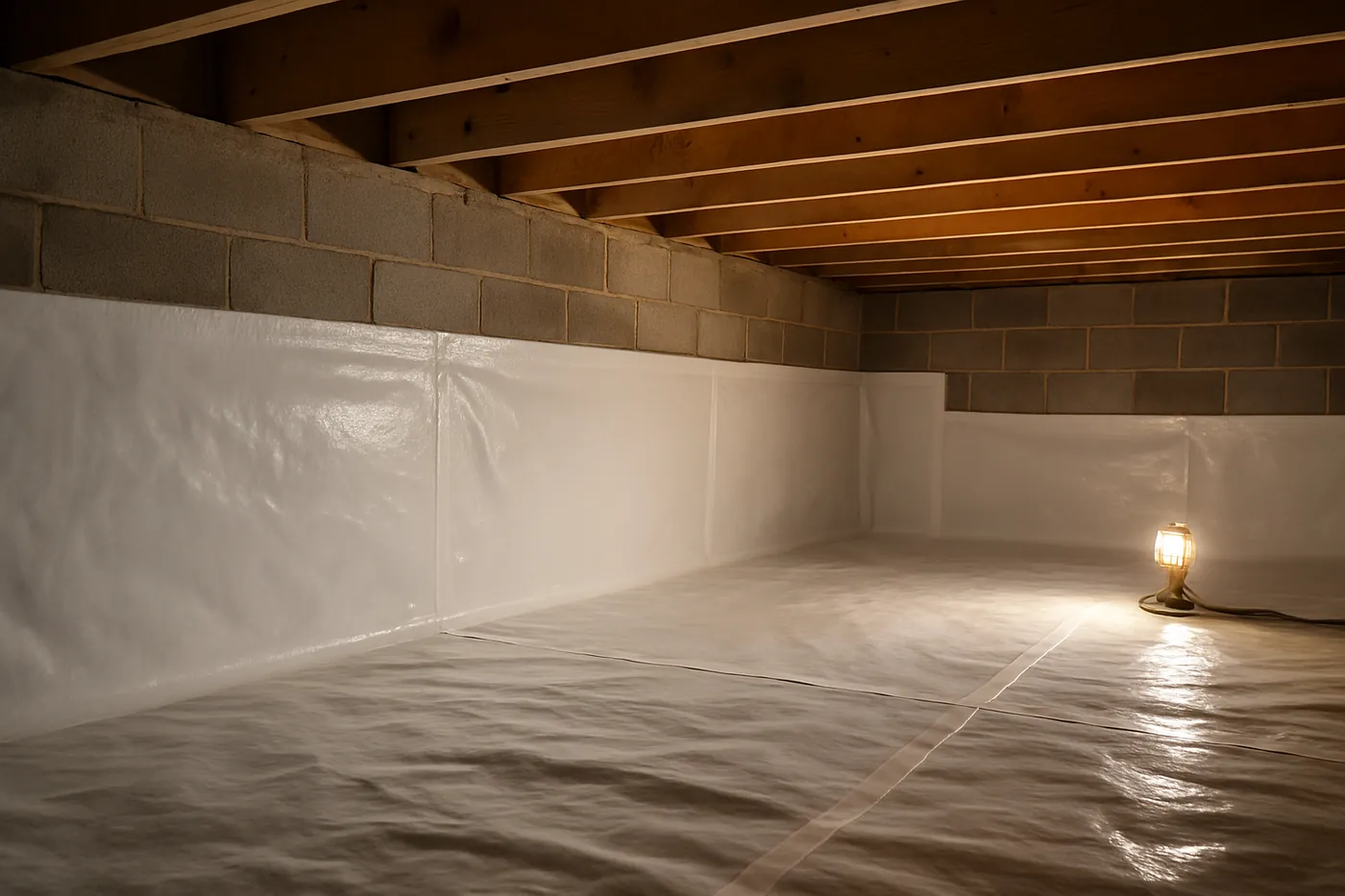
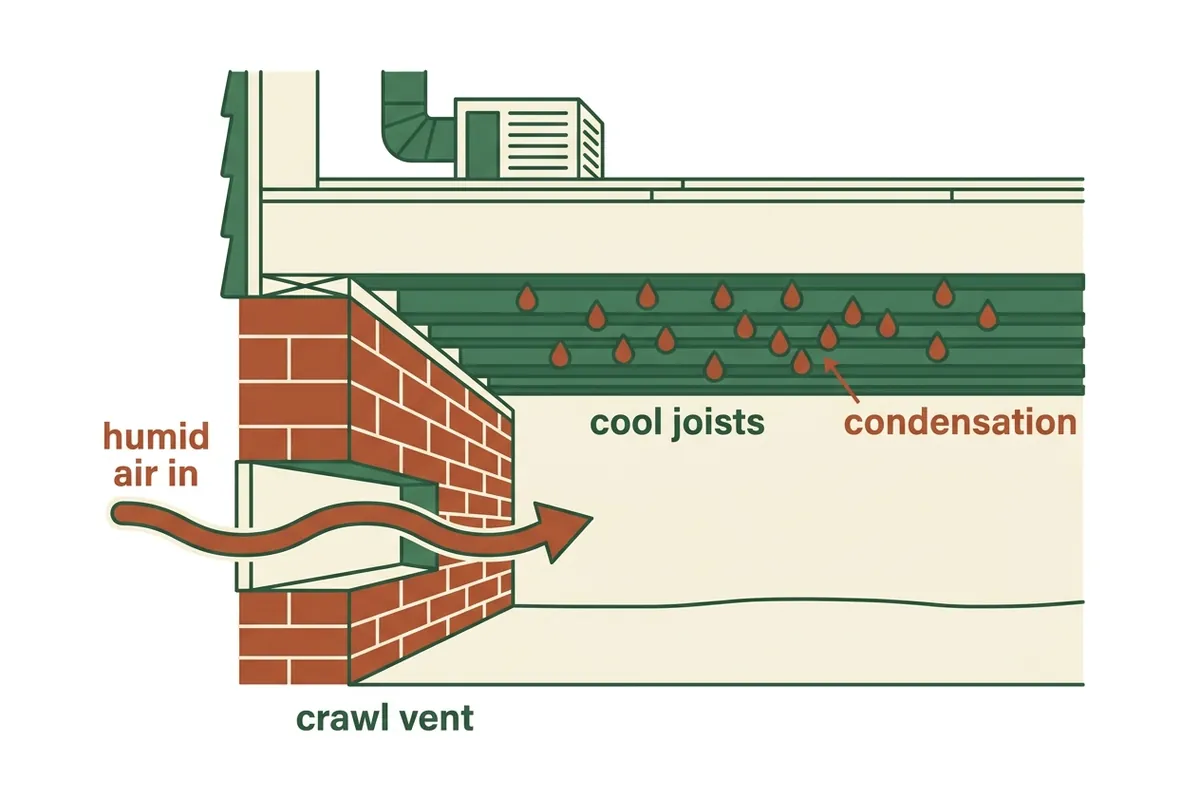
Water that reaches a raised house reaches the crawl space, and a saturated crawl doesn't dry on its own in this climate. It holds moisture and releases it upward into the floor system for weeks. Drying the living space while leaving the crawl wet means the moisture migrates back into what you just dried.
So a good scope includes the crawl in the drying plan, with its own readings and its own equipment where warranted, and the vapor barrier gets assessed afterward because standing water frequently displaces or damages it. A restoration bid on a raised Lowcountry house that never mentions the crawl space is incomplete.
What restoration includes
- Extraction: standing water first, with equipment sized to the volume
- Category assessment: clean, gray, or contaminated, because it decides what stays
- Material triage by meter readings rather than appearance
- Structural drying: air movers and commercial dehumidifiers placed for the actual layout, above and below the floor
- Cavity drying: wall cavities and under cabinets, where household equipment can't reach
- Daily monitoring against a dry standard taken from unaffected material
- Documentation: photographs, readings, cause, and timeline for the claim
What kind of water was it?
This is the first question, before drying starts, because it decides what can be saved. Recurrent tidal flooding and marsh-adjacent ground put a lot of Lowcountry water damage in the worst category from the moment it arrives.
| Source | What can usually be dried and kept | What has to go |
|---|---|---|
| Clean supply line | Most materials, if drying starts quickly | Little, provided it was not left wet for days |
| Appliance or HVAC overflow | Structure, usually; some finishes | Saturated insulation and pad |
| Tidal or storm water | Structure only, after cleaning | Carpet, pad, insulation, and affected drywall |
| Sewage backup | Structure only, after cleaning and verification | Every porous material it touched |
Drying a category-three loss as though it were clean water is the most expensive mistake in this trade, because the second remediation costs more than doing it properly first.
Water damage questions, straight answers
How fast do I need to act?
Same day. The standard guideline is that mold can begin establishing on wet materials within 24 to 48 hours, and Lowcountry heat and humidity sit at the aggressive end of that window because the surrounding air offers little drying capacity. Extraction started immediately is the difference between a drying bill and a remediation bill.
What does water damage restoration cost?
Most residential jobs run $1,000 to $8,000, driven by volume, spread, and how much material has to come out. Clean water caught within hours is the low end. Tidal or storm water climbs quickly, because water that carried contaminants means porous materials come out rather than being dried in place.
Is tidal flooding covered by insurance?
Generally not by a standard homeowner's policy: tidal and storm surge flooding falls under separate flood coverage. Sudden accidental water from inside the house, like a burst supply line, is usually the covered category. Ask the specialist to document cause, timeline, and readings carefully, because that distinction determines everything about the claim.
Should the crawl space be dried too?
Always, when water reached it, and it usually did. A crawl space that flooded holds moisture long after the visible water is gone, and drying the living space while leaving a saturated crawl underneath means the moisture simply migrates back up. The readings show when both are actually dry.
How do you know when it's dry?
Meters, not calendars. A good crew takes readings on affected materials at the start and tracks them daily against a dry standard measured from unaffected material in the same house. Equipment should come out when the readings meet it, and you should get the log. A crew pulling fans on a fixed schedule is guessing.
Get a Charleston mold inspection
Tell us what you’re seeing or smelling: a musty smell coming up through the floor, cupping hardwood, condensation on ductwork, staining on a wall, and we'll pass your request to one independent local specialist, who can set up an inspection. A specialist who serves the Charleston area will call you back.