
Most mold removal in Charleston is not covered by homeowners insurance: policies exclude mold from long-term moisture — the Lowcountry’s specialty. Coverage applies mainly to sudden covered water events, often capped by a mold sublimit; flood-driven mold is NFIP territory. Excluded work runs $500–$6,000.
The exclusion, the sublimit, the flood line, and the clock that decides claims.
The mold exclusion, plainly
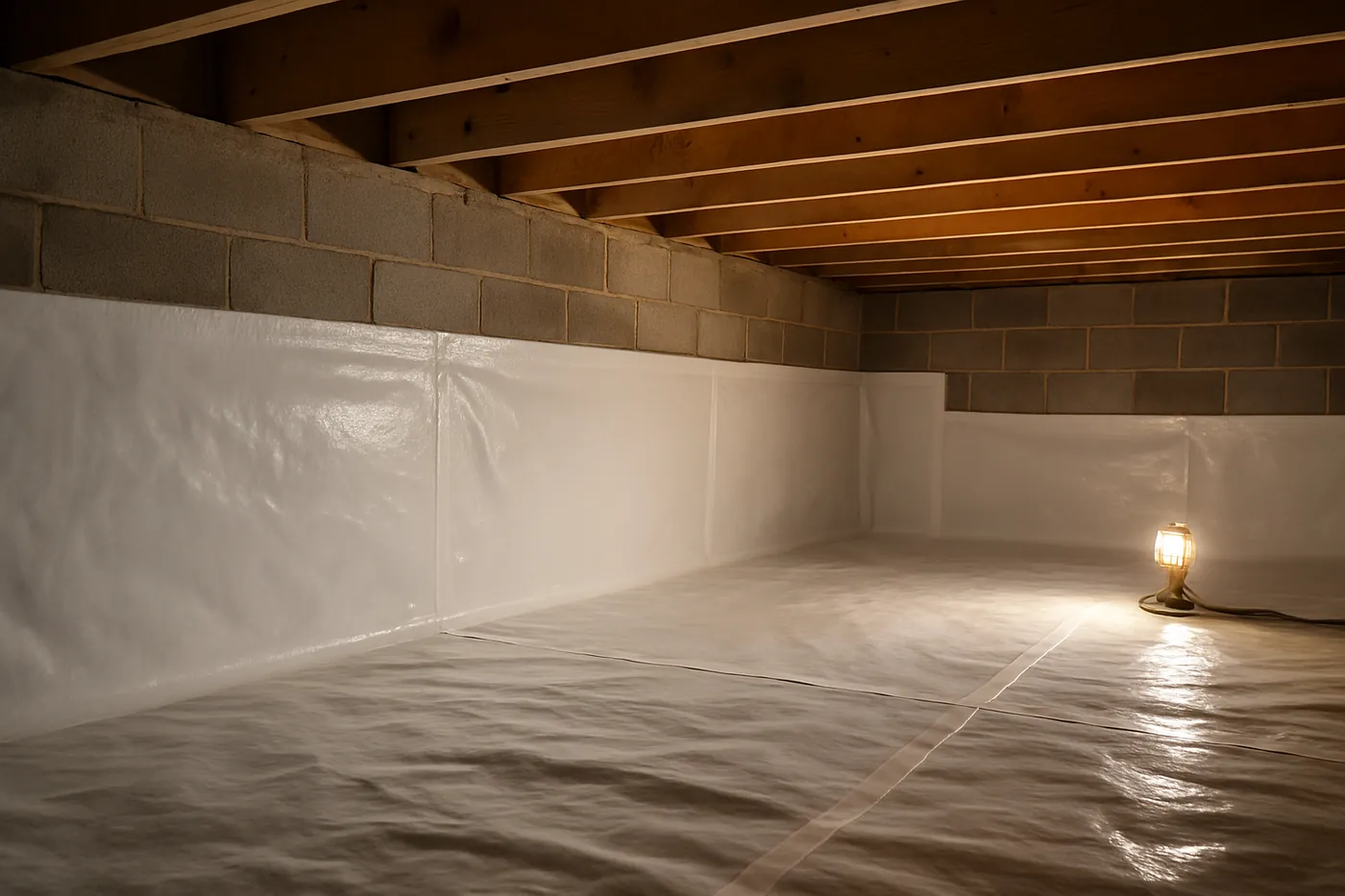
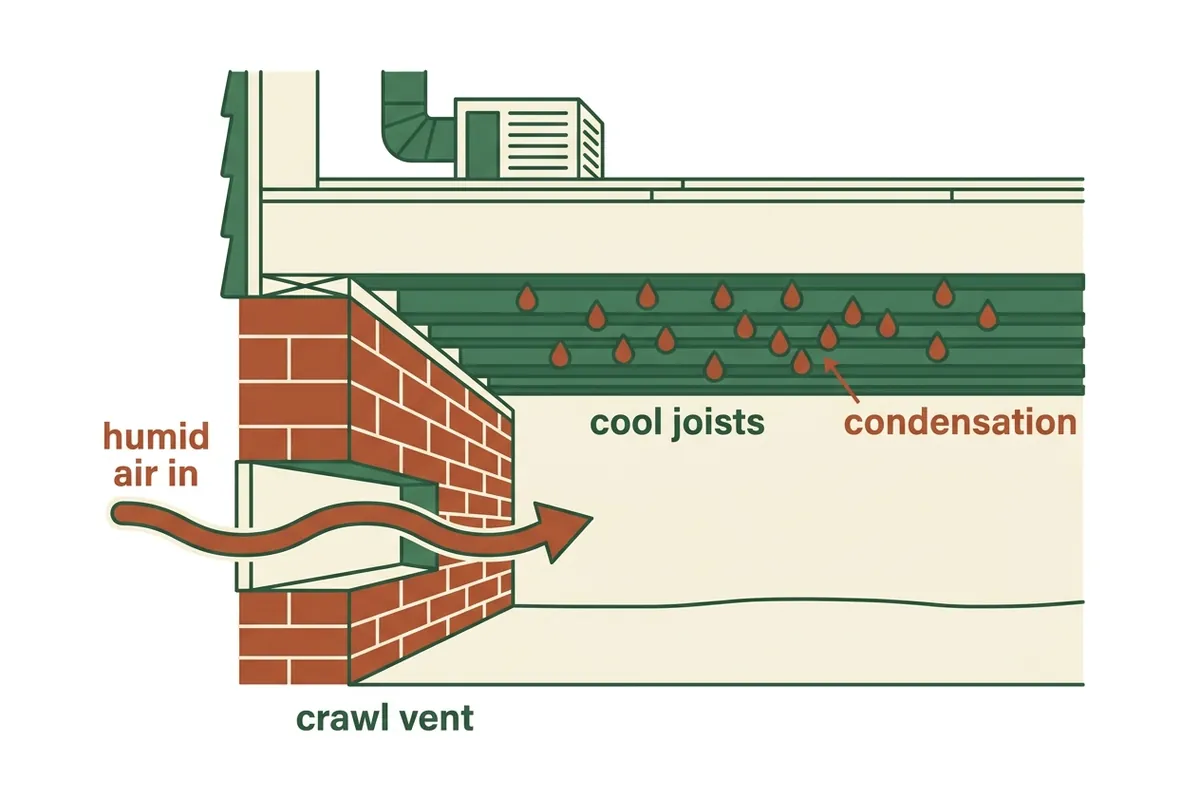
Homeowners policies treat mold from ongoing moisture as a maintenance outcome, not a covered peril: humidity, condensation, slow leaks, and vented-crawl damp are excluded causes, and that list describes most of what this climate grows — the crawl space colonies, the sheathing streaks, the closet corners of a humid August. The exception is mold resulting directly from a sudden covered water event: the burst supply line, the failed water heater, the storm-opened roof. Sudden and accidental are the operative words, and the policy’s own text controls.
The sublimit inside the exception
Even covered mold often meets a ceiling: many policies cap mold remediation — commonly somewhere in the $1,000–$10,000 band — separately from the water damage that caused it. The practical Charleston consequence: after a covered leak, fast drying doesn’t just satisfy your mitigation duty, it keeps the mold portion of the loss inside a number the sublimit can actually pay. Check your declarations page for the mold limitation endorsement today; it is the single most consequential fine print in a humid-climate policy.
Covered or excluded — the usual verdicts
| What happened | Usual outcome |
|---|---|
| Humidity, condensation, or crawl-damp mold | Excluded — long-term moisture |
| Mold after a burst pipe, dried and documented fast | Commonly covered — subject to the sublimit |
| Mold from a slow leak found months later | Usually excluded — not sudden |
| Mold after tidal or surge flooding | Homeowners: excluded. NFIP flood policy question |
| Mold behind long-deferred repairs | Excluded — maintenance |
The flood line Charleston keeps crossing
Surface and tidal water is excluded from homeowners policies entirely — mold after a king tide or storm surge is a flood policy question, and NFIP’s own mold language generally requires that growth couldn’t reasonably have been prevented after the event. For peninsula and marsh-adjacent addresses, that makes two documents worth reading before the next storm season: the homeowners mold sublimit and the flood policy’s post-event duties. Rapid dry-out serves both — and serves the house most of all.
Build the file, beat the clock
- Photograph the event same-day — the failed line, the water line, dates visible.
- Start drying immediately and keep receipts — mitigation is your policy duty and your evidence.
- Get the plumber’s written diagnosis naming the failure sudden.
- Document the growth before removal — photos and, where a dispute looms, testing at $300–$900.
When the answer is no — the common case — the cost guide prices every scope publicly, and a per-line estimate means the moisture fix and active removal can proceed now with cosmetics staged later.
If the denial letter comes back
A denial is a position, not a verdict. Ask the carrier in writing for the exact policy language it relied on, then attack the causation question rather than the mold question — mold is almost always excluded on its own, but mold resulting from a covered sudden discharge frequently is not. The evidence that moves a mold claim is a timeline: when the leak started, when it was discovered, and what you did the day you found it, backed by dated photos, the plumber’s invoice, and the moisture readings. The South Carolina Department of Insurance takes consumer complaints if the carrier stops engaging. And watch the policy’s suit-limitation clause — on mold claims it is often the deadline that ends the argument, not the merits.
Insurance questions, straight answers
Does homeowners insurance cover mold removal in South Carolina?
Usually not on its own. Policies broadly exclude mold that results from long-term moisture — humidity, condensation, slow leaks, deferred maintenance — which describes most Lowcountry mold. Coverage generally exists only when mold results directly from a sudden covered water event, and even then often under a mold sublimit. Your policy's exclusions and limits sections carry the controlling language.
What's a mold sublimit and why does it matter?
A cap inside the coverage. Many policies that do cover event-driven mold cap that mold portion — commonly somewhere between $1,000 and $10,000 — regardless of your overall dwelling limit. A covered burst-pipe claim can pay fully for water damage while the mold line hits its ceiling early. Knowing your sublimit before a claim shapes how fast you act after a leak.
Is mold after tidal or storm flooding covered?
That's the Charleston line: flood is excluded from homeowners policies entirely, so mold following tidal or surge water is an NFIP flood-policy question — and NFIP coverage has its own mold rules, generally covering it only where you couldn't reasonably have prevented growth after the flood. Peninsula and low-lying homeowners should know both policies' mold language before the next king tide.
Why does speed matter so much on a mold claim?
Because 'sudden event' claims rot into 'neglect' denials on a timer. Mold establishes on wet materials within days, and adjusters distinguish an owner who dried and documented promptly from one who discovered the problem a month later. Photograph the event, start drying, keep receipts — mitigation is both your duty under the policy and your best evidence.
What does mold removal cost when insurance says no?
What it costs anyone: most residential remediation runs $500-$6,000 by spread, whole-crawl jobs $4,000-$12,000, testing $300-$900. A per-line written scope lets you stage the work — the moisture fix and active-growth removal now, cosmetic finishes later. Most Lowcountry mold work is self-paid, which is why every number on this site is public.
Get a free Charleston mold inspection
Tell us what you’re seeing or smelling — a musty smell coming up through the floor, cupping hardwood, condensation on ductwork, staining on a wall — and we’ll schedule an inspection that includes going under the house. We reply the same business day.